

Blue Muck, A Pickax to the Foot & Why Tahoe's Forests Are So Unhealthy
Tahoe's early colonization started in the 1850s, but the floodgates truly opened in 1857 when two brothers uncovered silver and gold...

The Grosh Brothers
For 5 years in the early 1850s, Ethan Allen and Hosea Grosh traveled back and forth between California and Western Utah Territory looking for gold. In 1857, they uncovered sooty blue muck in the aptly named Gold Canyon along the eastern slopes of the Wá∙šiw People’s territory. Though they lacked the right tools to confirm the strange ore was indeed precious metal, they suspected they had found silver.
When the youngest brother, Hosea, struck his own foot with a pickax, infection killed him within the month. Two months after that, Allen and their friend Richard Bucke packed their ore samples and attempted to cross the Sierra Nevada, leaving their belongings in the care of Henry Comstock. As the two men climbed over Scotts Route (today’s Western States Trail), a November storm overtook them and their donkey escaped during the night. Days were wasted finding the jackass. When they did, they killed and ate the starving donkey and spent weeks trudging up and down the socked-in Olympic Valley.
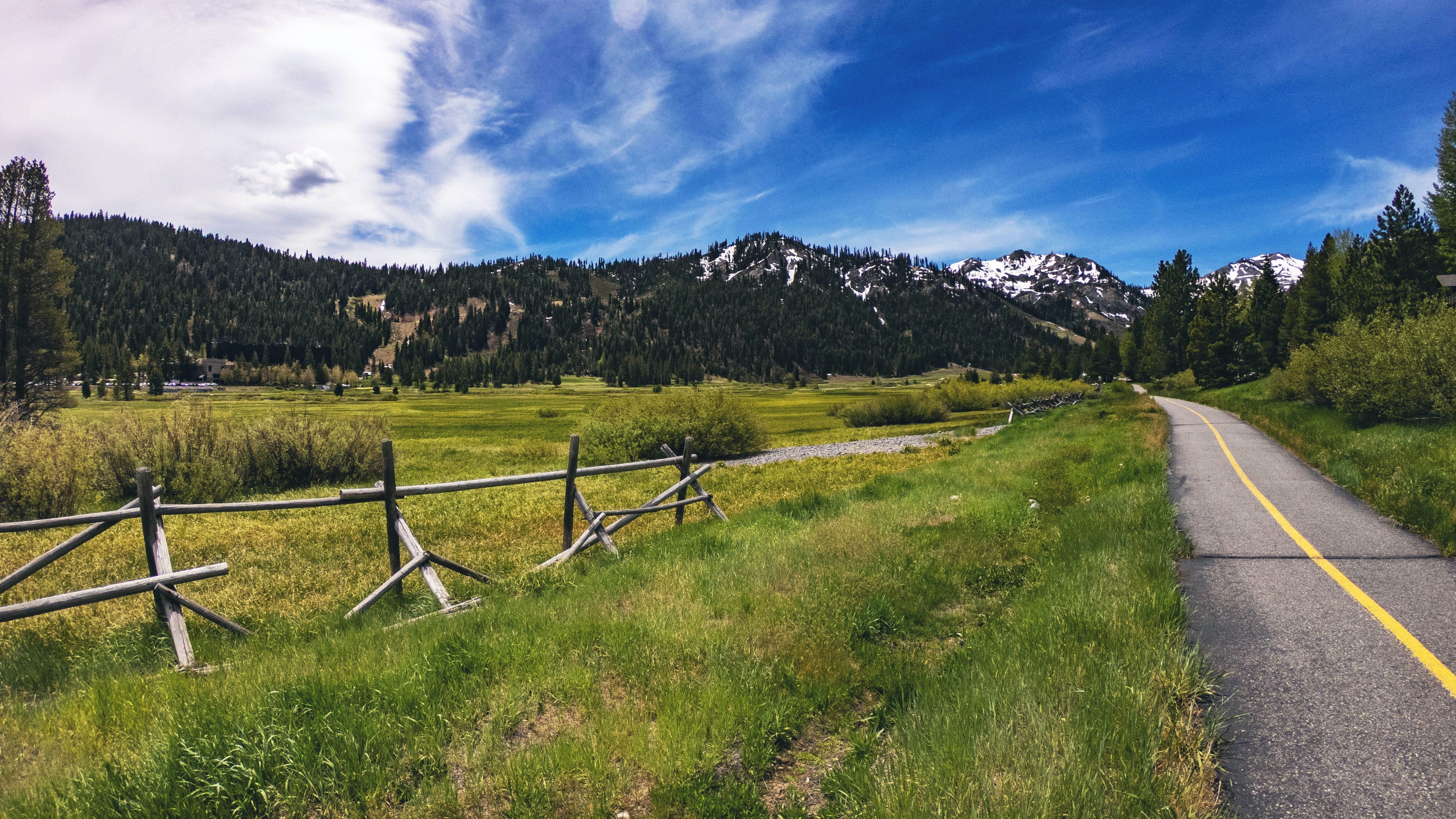
When Allen and Richard finally summited the granite peaks, they walked circles in snow-stormed mountains, lost, desperate and starving. Allen buried his ore samples, maps and journal in a hallowed tree, definitely memorizing its location, then they trudged downhill and collapsed from exhaustion. Two hunters near Last Chance (another aptly named place) found them and took them to shelter. Allen died on December 19, 1857, after having had both legs amputated from frostbite. Richard had one foot and many toes amputated and survived. Their ore samples were never recovered.
Meanwhile, Back in Gold Canyon
When Henry Comstock heard of Allen’s death, he began staking claims for himself, never quite sure where the Grosh brothers had collected their ore samples. Although the name Comstock is forever attached to the Grosh brothers’ unclaimed fortune, Henry made poor choices, little money and eventually died by suicide after attempting to start the next “Comstock” in Montana.
Two years after Allen and Hosea Grosh’s uncovering of silver ore, a man named Melville Atwood assayed ore samples in the same area in 1859. Word got out, and the results of this ore analysis officially began the Silver Rush of 1859, aka the Comstock Lode, aka the Washoe Bonanza.
Population Explosion
They say that at the height of their population, 3,000 Wá∙šiw People lived throughout the greater Tahoe area, migrating seasonally between the lower valleys in winter and returning to daɁaw, Lake Tahoe, each summer. Today, there are approximately 1,500 enrolled members of the Washoe Tribe of Nevada and California.
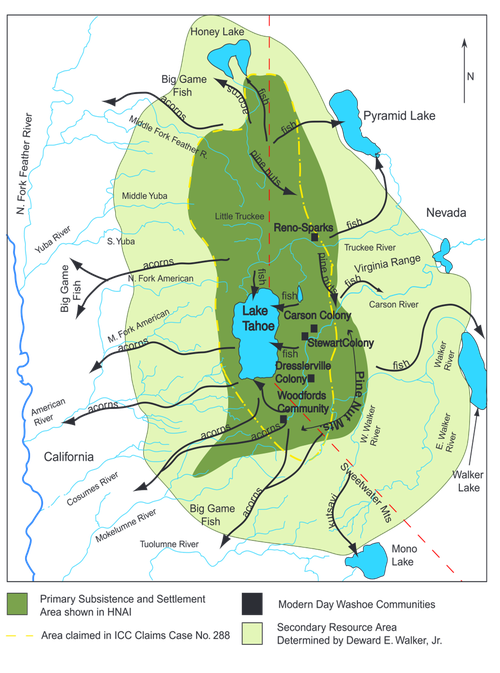
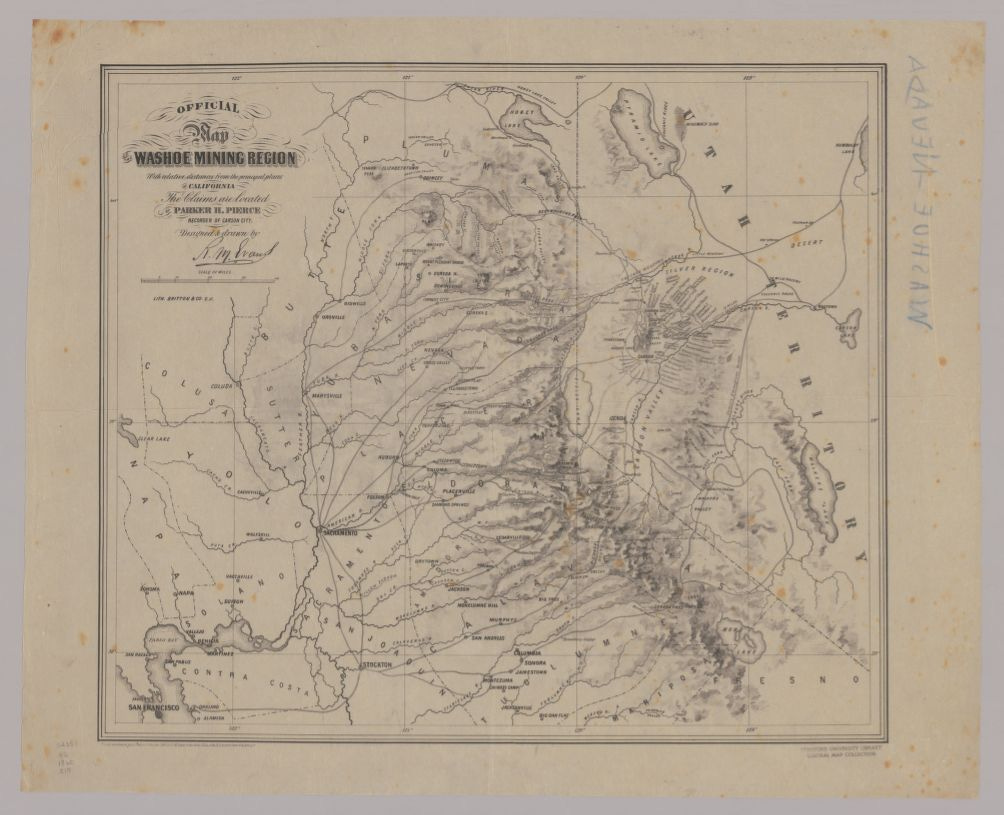
Within months of Atwood’s assay, small townships began popping up throughout Gold Canyon, bearing names like Gold Hill, Devil’s Gate, Silver City, and Chinatown. According to some historians, Virginia City’s population numbers of Euro-Americans were as follows:
1857 = a few scattered prospectors
1860 = 2,345 prospectors
1870 = 7,048 residents
1880 = 10,917 residents
Between 1872 and 1878, some reports claim up to 25,000 residents
2023 = 770 current population
How Mining Desecrated Lake Tahoe’s Forests
Logging for the Comstock began soon after the initial mining boom in 1859 (right when my book is set). Because of the sandy, unstable terrain surrounding the Comstock Lode, miners needed lumber to support their underground tunnels.
The first trees were cut in the nearby Carson Range for obvious transport reasons. Once the Carson Range was denuded, timbermen spilled over into Lake Tahoe, clearcutting the entire basin within 30 years (1860s-1890s). Lumber was also purchased to build businesses, homes, and eventually railroads. Cities like San Francisco and Sacramento bought lumber harvested from the Sierra Nevada where timber operations were thriving and forests were perceived to be endless.
Writing Logging As Fiction
The health of Tahoe’s forests is what launched me into this project in the first place. I’ve spent years researching Western American logging techniques, learning the difference between single- and double-bit axes. How loggers fashioned longer handles to reach the bellies of such massive trees. They started whet-stoning two blades instead of one because one dulled too quickly. How axes remained the chosen felling tool until the 1870s, even though buckers used long saws to cut timber into sections on the forest floor nearby.
Plenty of gritty details accompany American logging’s history, but what I needed to know for my novel was how my characters would cut trees in the Sierra Nevada in 1859. What methods did they use? Where was their training from (if any)? What’s a springboard? Did they use kerosine or was that really just oil? What’s a river hog, grease monkey, donkey puncher, whistle punk? What’s timberbind? How does one measure a fall line? Did they limb trees before felling them? Did they use toppers like they did in Washington? Should I call them fallers or fellers? (The answer is fallers, who fell trees…)
There’s a great book called Sawdust Trails in the Truckee Basin: A History of Lumbering Operations by Dick Wilson that informed my early research. It covers histories of names you may recognize like Hobart Mill, Carson and Tahoe Lumber and Flume Company, Yerington, D.L. Bliss, Verdi Lumber Company, Boca Mill, and dozens more.
Also, Ray, the very thoughtful owner of Keynote Used Records & Books in South Lake Tahoe, sold me a beautiful photography book by Darius Kinsey, whose images have been instrumental in helping me understand the vastness of trees none of us will ever experience again. Many of my characters were born from my time staring at these images.


Tahoe’s Forest Health
Anyone living in the American West today knows that fire danger is real. As we head into summer, we’re all planning around smoke season. Back in 2015, Tahoe Quarterly published this great article Sierra Nevada Forests In Dire Shape explaining why Tahoe’s forests are so unhealthy. To summarize:
Between the 1860s and 1890s, loggers clearcut the entire Lake Tahoe Basin.
Denuded lands preempted by white settlers were then sold to banks and other private investors, further excluding the Wá∙šiw People from managing their now desecrated homelands.
Younger, denser stands of trees and chaparral infilled where old growth used be, turning widely spaced, park-like forests into thick groves of crowded, eager saplings.
Over 100 years of fire suppression allowed drought-vulnerable understory species like fir to outgrow traditional drought-resistant upperstory species like cedar, pines and sequoia.
Now What?
So many smart people and dedicated organizations are focusing on repairing Tahoe’s forest health, trying to recover from the 170 years of forest abuse that started in 1859.
In January 2023, California State Parks and the Washoe Tribe of California and Nevada signed an agreement to co-manage state parks lands. This MOU doesn’t mean today’s Wá∙šiw People suddenly have time and resources to fix the damage done by early colonizers. It means that a channel for government-to-government communication has been officially established in which California State Parks agrees to include Wá∙šiw Traditional Management Practices and Ecological Knowledge in their land management discussions.
What Can I do?
Learning the history of a place, in my opinion, is a solid first step. No matter where you live, learn about the ecological and human history of that place. When and how were relationships broken? Who is putting effort into understanding how they can be repaired? I also like these suggestions put out by USFS’s Trees in Transtion for immediate action individuals can take:
Become informed about forest management activities and practices aleady happening in your area
Talk to your friends and neighbors; communicate your concerns to elected representatives
Volunteer to help out on special projects that interests you
Practice good defensible space habits on your property
Recreate responsibly on the land: leave no trace, pack it in, pack it out
While dozens of agencies and land owners are creating Forest Action Plans like this one, there is a lot of more micro-engagment we can do. 170 years ago, early colonizers weren’t thinking about us. Today, we are suffering the consequences of their decisions.
Next time you’re outside, spend time with the trees. What kind are they? Are they crowded? Sick? Healthy? How old do you think they are? Can you imagine what Tahoe’s forests looked like 200 years ago?
Let me help you. Soon (oh very soon) I will finish my historical novel about logging in Lake Tahoe, which is set in 1859 for a reason. That is the moment when forest management shifted from thoughtful to abusive. That is the moment we lost balance. That is the moment when everything changed.
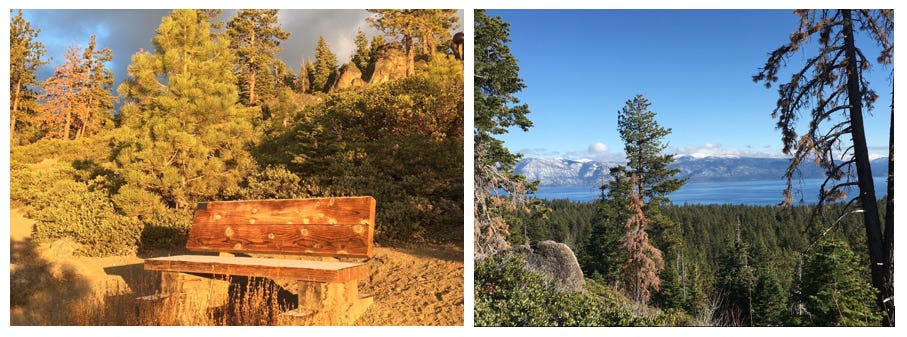
Progress is slow but steady. Having your support over these many years while I research and write this novel has been instrumental. Thank you to everyone who continues to encourage me. I wouldn’t have the stamina without you!
Documentary, intrigue, suspense, romance...? I'm so impressed how you writers can angle a story, especially something like this. But don't forget us knuckle draggers, I hope you include a glossary! I saw a documentary on P.T. Boats for WWII~ in it they said there were these two Danish brothers who carved the bow (prow) part of the keel by hand with Axes for every boat they produced. To your question on falling trees before saws, them crafty Danish been building and other things with Axes for a long time, proficiently. Kind wishes always Meghan! UM
This article made me understand even more how you got captivated by this place and time in history. And all those amputations, yikes! Thanks for this great background!