

Cultural Appropriation Vs Repatriation: The Problem with Indiana Jones
Let's go one step further in challenging the Heroes Journey and ask who gets sacrificed in these iconic western narratives.

I love Indiana Jones. I’ve watched the original 3 movies on VHS hundreds of times. They were my go-to on snow days, sick days, anytime I didn’t have to go to school.
The problem is not necessarily that this fictional character is following our classic Hero’s Journey. The problem is how and why he seeks them in the first place.
Archaeologist or “Good-Guy” Thief?
Always the good guy, Indiana Jones has a flaw: his obsession with archeology drives him to either be the first to uncover an artifact or he’s just so curious to prove that it exists. He outwits bad guys wanting the artifact’s power for immortality, world domination, or pure selfishness, but in every movie, Indiana leads the way using his skill, education, wit and whip.
Chaos follows him. Time-tested riddles don’t stand a chance. He’s our classic hero, leaving a path of destruction in his wake. As audiences, we accept this, we don’t look back. We don’t worry about the temple, people, history he’s just destroyed, because—cut to the next scene.
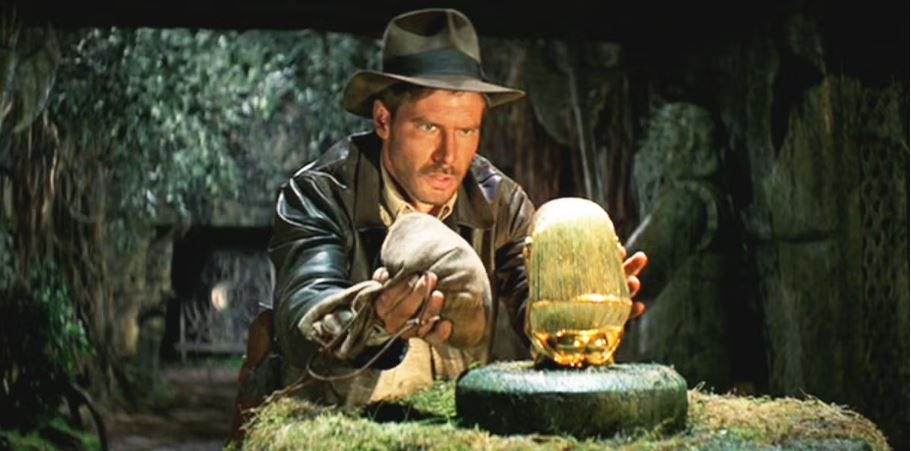
Quick Recap of the Original 3:
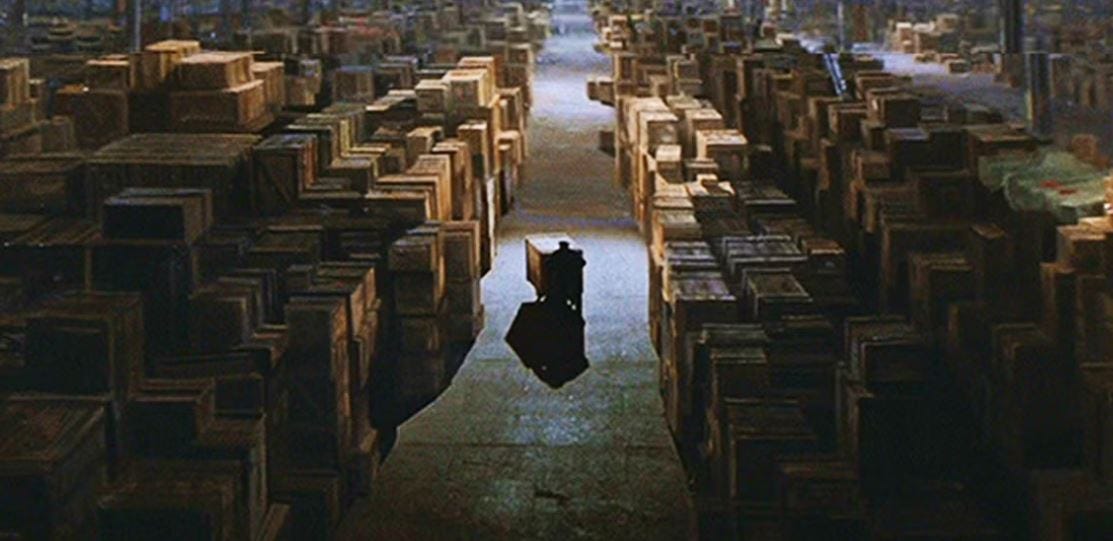
Raiders of the Lost Ark (1981) – In 1936, Nazis are digging for the Ark of the Covenant, a real-life artifact that held the Ten Commandments said to make any army invincible. In the end, the U.S. government locks the ark away in a massive warehouse housing thousands of other valuable artifacts.
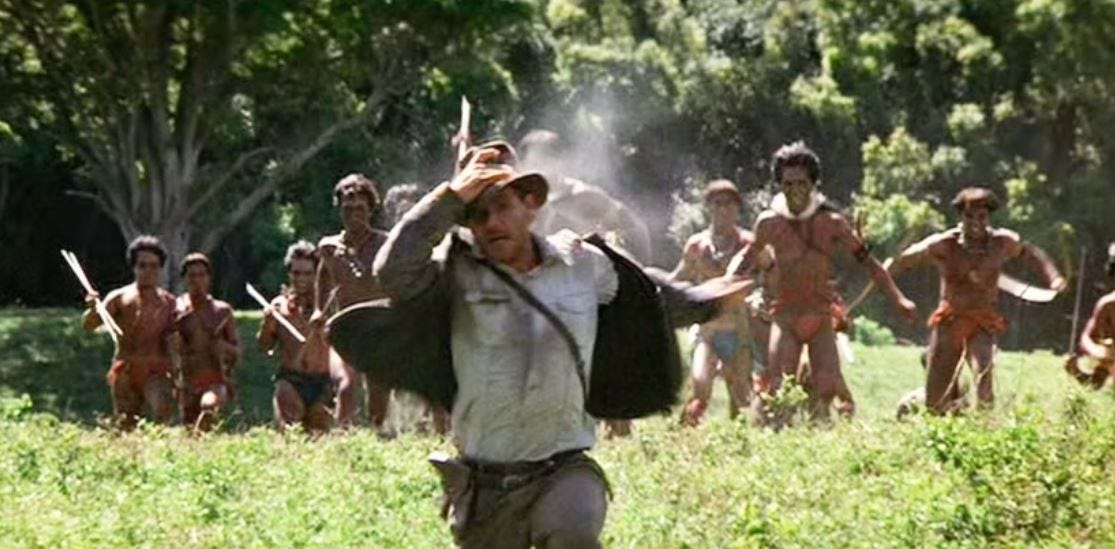
Temple of Doom (1984) - 1935 India, villagers ask Indy to return their sacred stone, whose disappearance caused the drying of their water sources, and to save their children from forced labor and a secret cultish temple that practices human sacrifice. In the end, Indy destroys the temple, returns the stone, and the children are freed.
Indiana Jones and the Last Crusade (1989) – In 1938, Indy’s father Henry disappears, and Indy uses Henry’s diary to find the Holy Grail, inadvertently leading Nazis there as well. In the end, Indy identifies the correct grail, saves his father, and when Elsa tries to cross the threshold, a crevasse opens and she and the Grail fall into an abyss, presumably never to be seen again…
“This Belongs In a Museum!”
Today, museums across the world house culturally significant items that were stolen from their original owners by the British, French, Spanish, Nazis, Americans, pretty much every colonizing group out there. They are still being taken to cities, put on display, and sold at auctions for other wealthy community members to experience.
Recently, there’s been some attempts at reconciliation like the 1990 Native American Graves Protection and Repatriation Act. In 1999, the National Museum of Natural History repatriated the human remains of Ishi to descendants of the Yahi-Yana Nation. In 2022, the Smithsonian returned 29 Benin bronzes to Nigeria 125 years after they were stolen by the British. Not without major petitions from the recipients.
In America, hundreds of thousands of human remains and artifacts rightfully belonging to Native American, Native Hawaiian and Alaska Natives are still held by museums, universities and federal agencies. You can buy them on eBay. Baskets made by Wá∙šiw weavers (the Indigenous People of Lake Tahoe) sell for thousands of dollars. It is our responsibility to start noticing these things and to speak up.
Cultural Appropriation Vs Repatriation
Cultural appropriation is when a person or group uses cultural elements that are not their own to exploit, make money, or disrespect the culture from whom they have borrowed.
Repatriation is when human remains and cultural items are returned to lineal descendants of their original keepers.
Indiana Jones hardly toes the line. He doesn’t even know what repatriation means. At least in Temple of Doom, he returns the sacred stone to the villagers (but also the movie offensively stereotypes a real-life community exaggerated as terrifying bad guys, and there are serious issues of White Saviorism), but at least he didn’t keep the stone for himself, sell it, or put it in a museum.
The Value of Museums
I recently interviewed Liz Woody, the Executive Director of The Museum at Warm Springs here in Central Oregon, which was built to meet Smithsonian Institute standards specifically so they could repatriate and receive repatriated items from any institution in the United States. Woody said, “Repatriating traditional objects means returning items to Indigenous nations, which are still recovering from [colonial] atrocities.” This means “not just having display areas but having a kind of conservancy.”
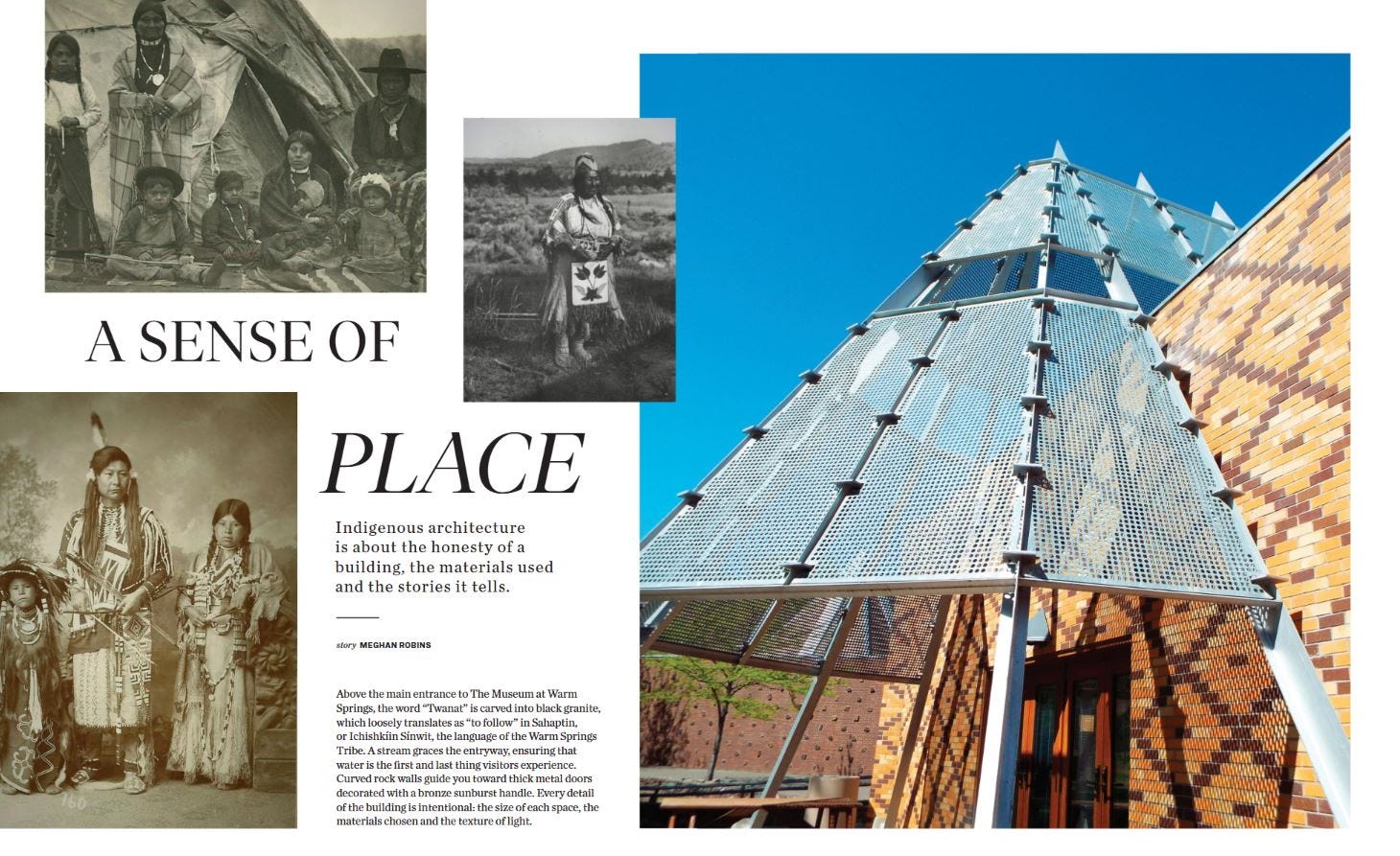
Part of going to museums means doing your research, questioning their Repatriation Policies, and asking why/how they have these artifacts in the first place. It is actually something we all can do to help right the wrongs of history.
High Country News published this amazing article: How do you describe a sacred site without describing it? in which the author ‘Toastie’ Oaster explains the conundrum many Indigenous People face: Developers, researchers, official agencies want them to report the locations of sacred sites so they can be protected. But in doing so, they may be violating the very nature of that sacred site by talking about it or revealing it. As one commenter wrote, “It’s an insidious trap of settler colonialism.”
How Should We Value Museums?
I’m beginning to rethink what value history holds for me. The existence of museums has definitely helped me with invaluable research while writing my own novel, but I rarely stopped to think about where these artifacts came from. More importantly, to whom do they rightfully belong?
As we continue to embark on this journey of Re-Education together, I ask you: What items actually belong in a museum? Why? What part of history was taken, destroyed, or disrespected in order for them to be here?
I still love Indiana Jones movies, even the not-so-great later ones. As stories go, they check all the right boxes for me. But now that I’m watching with a more critical eye, I wonder who Indy has left reeling in his wake? Who and what did he sacrifice to achieve his missions?
To take it further, in our world today, what can I do to help ensure that rightful owners remain the keepers of their own artifacts?
P.S. Agent Update
I’ve sent queries to 32 agents and have 17 rejections. I read somewhere there’s a 2/100 chance, so I’m aiming to hit that 100 mark by the end of next month.
P.P.S. Please Don’t Sit This One Out!
Here is my final plea, asking you to VOTE. These issues are top of my mind:
Rectifying the harm already happening by those wanting to take away women’s rights. You (they) must know taking away my reproductive freedom will affect every American regardless of gender, age, religion, or pride. It will weigh heavily on our health care system (which will also be dismantled so maybe that won’t matter). It will further cripple our mental health crisis. It is simply inhumane. This seriously matters to me. PLEASE do not let any more women die under the guise of being “pro-life.”
Keep public lands public. Federal lands are under attack. *Some* people think lifting federal land protections, or handing over federal lands to states, will solve our housing crisis. There are so many flaws with this concept I don’t even know where to start. States will inevitably get burdened by the cost and sell to private citizens, who won’t build more affordable housing (the infrastructure costs alone would be crippling). And then we won’t have any public lands to enjoy…
Decency. Good God, decency. I don’t understand why anyone thinks hate over hope, lies over honest work, is how we should run this country.
This election weighs heavily on me, on all of us. The least you can do is go out and vote.

I have always believed that the storehouse for the Ark of the Covenant is in the middle of the Nevada near Hawthorne where there are acres of ammunition bunkers. It may not hold the ark but there’s stuff there. 85% of Nevada is owned by the government.
Thought provoking as always. Thanks, Meghan!
PS I voted this morning ;)